
One of the greatest violinists in the world once stood inside a busy subway station and played a $3.5 million violin.
Over 1,000 people walked past him.
Almost nobody stopped.
A few tossed coins into his case.
Most ignored him completely.
Three days earlier, that same musician had sold out a theater where people paid over $100 per seat to hear him perform.
The musician was Joshua Bell.
The difference wasn’t the quality of the music.
It was the context.
And that’s exactly why most fitness affiliate blogs fail.
Many bloggers create content they believe is “valuable,” but they publish it in the wrong context. They write motivational posts when readers are actually trying to make buying decisions.
A person searching:
“best treadmill for apartment living”
is not looking for inspiration.
They’re looking for clarity.
They’re typing things like:
- “Does this supplement actually work?”
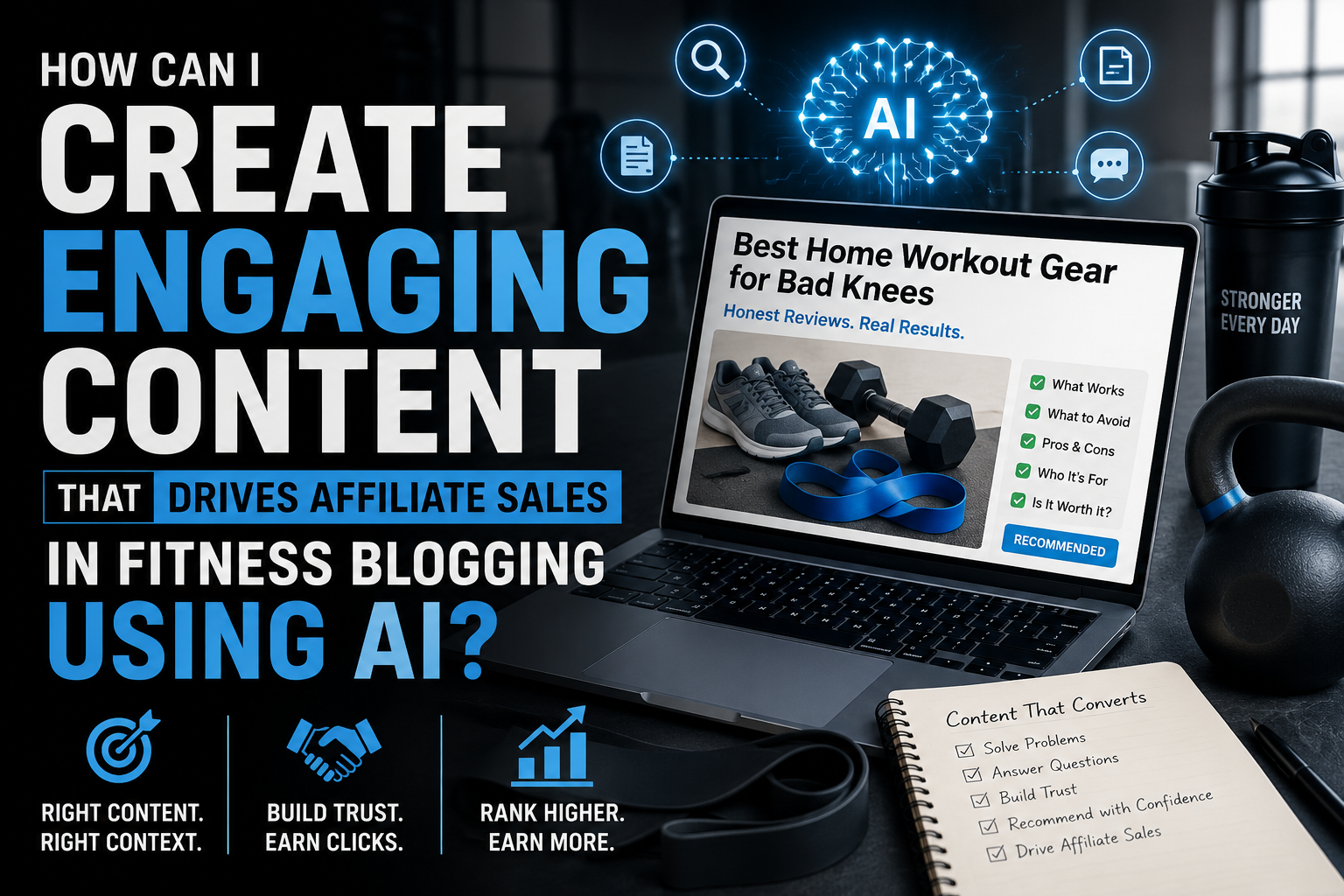
- “What’s the best home workout gear for bad knees?”
- “Is this fitness program worth the money?”
If your content doesn’t help someone make a buying decision, affiliate sales won’t happen—no matter how good your writing is.
This guide shows how to use AI the right way in fitness blogging:
- Not to replace your judgment
- Not to flood the internet with generic content
- But to create clear, trustworthy answers that people (and search engines) reward
If you want fitness content that ranks, builds trust, and earns affiliate income, start here.
Why AI Is Changing Fitness Blogging Faster Than Most Bloggers Realize
Fitness blogging used to reward consistency.
Today, it rewards usefulness.
AI has changed the speed of content creation. Thousands of fitness articles are now generated every day. Most of them sound the same:
“10 Best Exercises for Weight Loss”
“Top Protein Powders for Muscle Gain”
“How to Stay Motivated on Your Fitness Journey”
The problem is not AI itself.
The problem is that most bloggers use AI like a content machine instead of a research and clarity tool.
Search engines are getting better at detecting shallow content. Readers are getting faster at ignoring it.
People do not trust generic fitness advice anymore.
They want:
- evidence,
- comparisons,
- honest opinions,
- practical guidance,
- and clear recommendations.
That is where AI becomes powerful.
Not when it replaces thinking.
When it improves thinking.
What Engaging Affiliate Content Actually Looks Like
Most affiliate content fails because it talks too much about features and not enough about outcomes.
Bad affiliate content says:
“This treadmill has a 3.0 HP motor and Bluetooth connectivity.”
Useful affiliate content says:
“If you live in an upstairs apartment, this treadmill is quieter than most models and folds vertically, which matters if you have limited space.”
One describes a product.
The other solves a problem.
Fitness buyers are usually trying to solve one of five things:
- pain,
- confusion,
- insecurity,
- inconvenience,
- or wasted time.
Your content should help them move closer to a decision.
That means your blog posts should answer:
- Who is this for?
- Who is this NOT for?
- What problem does this solve?
- What are the tradeoffs?
- Is it worth the money?
- What happens after 30, 60, or 90 days of use?
AI can help you structure and organize these answers faster.
But your judgment is still what creates trust.
How To Use AI Properly in Fitness Blogging
Most bloggers ask AI to “write a blog post.”
That is the wrong approach.
Instead, use AI in stages.
1. Use AI for Search Intent Research
Start by understanding what readers are actually trying to accomplish.
Instead of asking AI:
“Write a post about protein powder.”
Ask:
“What questions does someone ask before buying protein powder for weight loss?”
Or:
“What concerns does a beginner have before buying adjustable dumbbells?”
Good affiliate content starts with buyer psychology.
Not writing.
2. Use AI to Organize Information
AI is excellent at helping you structure messy research.
For example, you can ask AI to:
- compare product specifications,
- summarize customer reviews,
- identify recurring complaints,
- organize pros and cons,
- or simplify technical fitness language.
This saves time.
But you still need to verify the information yourself.
Trust is built when readers feel that a real person evaluated the recommendation carefully.
3. Use AI to Improve Clarity
Most people do not want “expert language.”
They want understandable language.
A beginner searching:
“best resistance bands for seniors”
does not want exercise science terminology.
They want:
- safety,
- simplicity,
- ease of use,
- and confidence.
AI can help rewrite complicated explanations into plain English.
That matters because clarity increases conversions.
Confused readers rarely buy.
4. Use AI to Generate Better Content Angles
Many fitness niches are overcrowded.
AI can help you find underserved angles inside competitive topics.
Instead of:
“Best Exercise Bikes”
You might create:
- Best Exercise Bikes for Small Apartments
- Best Exercise Bikes for Seniors With Knee Pain
- Best Exercise Bikes Under $300
- Best Exercise Bikes for Beginners Over 40
Specificity creates relevance.
Relevance creates clicks.
Clicks create affiliate revenue.
The Biggest Mistake Fitness Bloggers Make With AI
They publish too quickly.
AI makes it easy to create 20 articles in a weekend.
But volume without usefulness creates invisible content.
Readers can feel when an article lacks:
- experience,
- testing,
- nuance,
- or honesty.
The best affiliate blogs feel personal and practical.
That means:
- adding real observations,
- discussing drawbacks,
- sharing actual use cases,
- and speaking like a human being.
If every product sounds “amazing,” readers stop believing you.
Sometimes the strongest affiliate content says:
“This product is overpriced unless you specifically need feature X.”
Honesty increases credibility.
Credibility increases long-term income.
What Search Engines Reward Now
Search engines increasingly reward content that demonstrates:
- expertise,
- experience,
- trust,
- and usefulness.
That means generic AI content is becoming less effective over time.
The bloggers who will win in fitness affiliate marketing are the ones who:
- understand buyer intent,
- organize information clearly,
- build trust slowly,
- and use AI as an assistant rather than a replacement.
AI can help you produce faster.
But clarity is what produces sales.
Final Thought
Joshua Bell was still a world-class musician in the subway station.
The quality never changed.
The context did.
The same thing happens with affiliate content every day.
You can publish excellent information and still fail if the content does not match what the reader is trying to accomplish in that moment.
Fitness blogging becomes profitable when your content helps readers make decisions with confidence.
That is where AI helps most.
Not by replacing your voice.
But by helping you create clearer, more useful content at scale.