“Is blogging still worth it for a small business, or am I just wasting time writing posts nobody acts on?”
“What’s the real difference between blogging to ‘have content’ and blogging that actually grows a business?”
“Why does my blog get views but never seem to bring in leads, clients, or sales?”
If you’ve ever asked any o f the questions above, or something like it, then this is the blog post you’ve been looking for. By the team you reach the end, you will have the answer to all three. The short answer is this:
Yes, blogging is still worth it for small businesses; but blogging isn’t about publishing content anymore—it’s about deliberately turning attention into trust, and trust into action.

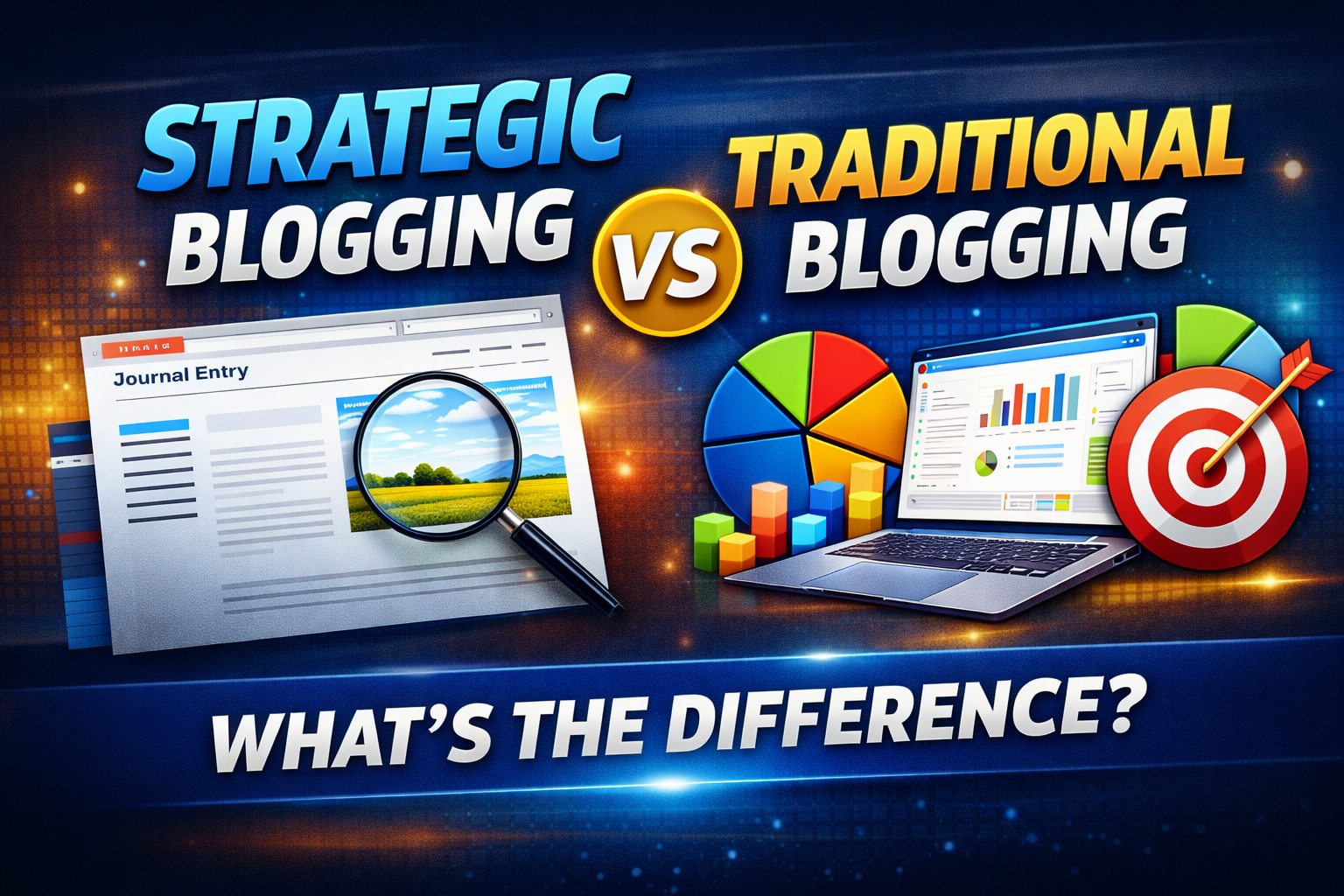
Blogging isn’t what it used to be! There’s a massive shift between traditional and strategic blogging, and it’s crucial to understand what makes them tick.
Traditional blogging was simpler—think of it as keeping a digital diary or throwing content into the wild, hoping it sticks. You’d write about your company’s latest news, product releases, and maybe some insightful thoughts, and that’s about it! It was all about making your presence known on the internet.
Strategic blogging, though, is a whole new ballgame. It’s like having a secret weapon in your digital arsenal. It’s not just about writing; it’s about planning, targeting, and making each post work like a magnet for your audience. This approach focuses on knowing who you’re writing for and crafting content that hits their sweet spot.
One big perk of strategic blogging is that it connects the dots for your audience. It personalizes the experience, turning readers into loyal followers. They keep coming back because you’re speaking their language, addressing their needs, and helping them solve problems.
The modern reader’s expectations are sky-high. They’re savvier and want content that’s not only informative but tailored to their personal preferences. With strategic blogging, you deliver precise content that resonates, keeping your audience engaged and wanting more.
The Role of Blogging in the Digital Marketing Ecosystem
Blogging and social media marketing often get compared, but they’re like two sides of the same coin. Both play essential roles in shaping your brand’s voice and reputation. Blogging gives those detailed insights and thoughtful content that you can’t always squeeze into social media’s bite-sized world. It’s where you can delve deep into topics, educate your audience, and position your brand as a thought leader.
When it comes to email marketing, blogging acts like a trusty sidekick. Imagine sending out a newsletter with teaser content that leads back to your blog—it’s like a breadcrumb trail that keeps readers coming back for more. Their relationship is like the dynamic duo of digital marketing, with each empowering the other.
Already nabbed those clients? Perfect! Blogging keeps them engaged and informed. It’s a platform to update them on industry trends, company milestones, or even share some handy tips and tricks.
Now, combine blogging with other digital strategies—SEO, social media, and email marketing—and you’ve got a formidable team. When these elements work together, they create a cohesive and powerful marketing machine that enhances your brand’s visibility and authority across multiple channels.
The Impact of Blogging on Long-Term Brand Equity
When it comes to brand equity, blogging is like planting seeds that grow into a mighty oak of trust and loyalty over time. Every blog post is a chance to show off what your brand knows, creating a treasure trove of information that your audience can rely on.
Building authority through blogging means you’re not just another business shouting into the void. Instead, you’re the go-to expert in your field. Your audience will start seeing your brand as a trusty source of information, forming a strong bond that competitors can’t easily break.
SEO is another big win here. Search engines love fresh, quality content, and regular blogging is like feeding the SEO beast. It boosts your rankings, drives traffic, and even helps in building organic reach without constantly spending a fortune on ads.
Blogging gives your brand a human face, showcasing experience and industry knowledge that people connect with. It’s a space to articulate your brand’s unique voice and values, resonating with the heartbeats of your audience.
Over time, as your archive of insightful and helpful blogs grows, so does the public perception of your expertise. This longstanding reputation becomes an anchor for your brand’s identity, making your online presence not just visible but influential.
Common Pitfalls in Small Business Blogging
Starting a blog is no small feat, especially for small businesses trying to make their mark. One of the most common mistakes? Lacking a clear strategy. Many small businesses jump into blogging without a plan, which often leaves them spinning their wheels with little to show for it.
Ever feel like you’re shouting into the void? That might be because your content doesn’t speak directly to your audience. Crafting content without a deep understanding of your audience leads nowhere fast. It’s like trying to sell winter coats in the desert. Who’s your audience? What do they struggle with? Tapping into these insights can redefine your blogging success.
Original and authentic content is your golden ticket. Businesses that recycle common knowledge without adding unique insights fall flat and miss the chance to stand out. It’s about creating value, not just noise. Give your readers something they can’t find anywhere else.
Sometimes, businesses throw in the towel too quickly. Results might not flood in overnight, but consistency is key. Patience, combined with a solid strategy, can yield great rewards over time. Skipping data-driven decisions is another blunder—numbers tell the story of what works and what doesn’t.
A well-structured blog can significantly minimize effort while maximizing output. Investing time upfront in understanding what works leads to effective blogging. Small businesses frequently overlook the importance of strategy and analytics, wasting effort instead of leveraging these tools for better engagement and growth.
Evaluating the Effectiveness of Your Blogging Strategy
Measuring blogs isn’t just about counting likes or shares—it’s diving deeper into how each piece impacts your business goals. Understanding the metrics that truly matter will set you apart, like engagement rates, conversion numbers, and even the time readers spend on your site.
The key is tracking the right data to know what resonates with your audience. This isn’t one-size-fits-all—what works for one brand might not work for another. Find what clicks with your readers mix and match strategies until your blog aligns perfectly with their needs.
At some point, it might become clear your strategy needs a change. If old topics aren’t gaining traction, or your analytics show a drop in engagement, it’s a sign. A strategy pivot isn’t a failure—it’s growth, steering the ship towards new opportunities.
Seeing dips in performance or a stagnant growth chart can feel disheartening. Yet, it’s an opportunity to assess whether your blog connects with the readers’ evolving interests. Sometimes, trying something fresh revitalizes your efforts and brings you back into the game.
Many brands found success by staying adaptable. When a particular type of content doesn’t yield results, switching up the formula can reignite audience interest, leading to a fresh wave of success.
Implementing a Minimum Viable Blogging System
Crafting a small business blog doesn’t have to be overwhelming. By focusing on what’s essential, your blog can become a well-oiled machine without draining your resources. A minimum viable blogging system focuses on what’s necessary to keep your blog running efficiently and effectively.
Begin with setting a realistic schedule—consistency is key. Regular posting, even if it’s less frequent, keeps your audience coming back for more. Quality trumps quantity, so ensure every post is packed with value. Cover topics that your audience finds relevant and interesting. It’s about making each piece count, engaging readers, and sparking their curiosity.
Resources might be tight, but that’s no reason to skimp on quality. Utilize tools available—like content calendars and SEO tools—to streamline your process. These can help plan effectively and improve your blog’s reach.
Collaborating with experts or guest bloggers can also amplify your content’s quality and bring fresh perspectives. However, maintain coherence with your brand’s voice and mission. Keep your blog diverse yet consistent.
Finding successful examples can guide your strategy. Look at businesses that efficiently manage their blogging schedules without extensive resources. They deliver consistent high-quality content, providing models of what works and what doesn’t.
Minimal viable blogging isn’t about doing less, but doing what’s effective with efficiency. It’s about finding that sweet spot where your efforts bring optimum returns, keeping your business growing steadily in the digital landscape.
At this point, the difference should be clear. Blogging that works is intentional. It’s built on understanding your audience, creating content with a purpose, and connecting that content to real business outcomes. If you’re a small business owner who wants a structured way to do this—without chasing trends or guessing what to do next—Wealthy Affiliate is worth exploring. It gives you the training, tools, and step-by-step framework to build a strategic blog that attracts the right people and turns attention into long-term value. Not hype. Not shortcuts. Just a solid system for business owners who want blogging to actually work.