
Affiliate marketing is a fantastic way for college students to explore the digital world and earn some income on the side. It’s all about promoting someone else’s products and earning a commission for every sale you make through your unique affiliate link. But how does it really work in practice? It’s simple—it’s like being a middleman between the seller and the customer.
The digital age has transformed the way we do things, and affiliate marketing’s smack dab in the middle of this revolution. It’s a win-win for advertisers who get someone to promote their stuff, and for you, the affiliate, who gets a slice of the pie when someone buys from your link.
So why should college students even bother with affiliate marketing? For starters, it’s flexible, meaning you can do it at your own pace, whenever you’ve got some downtime from your studies. Plus, it’s a chance to pick up marketing skills that’ll look great on your resume.
Benefits of Affiliate Marketing for College Students
Earning a degree doesn’t have to mean being broke all the time. Affiliate marketing is a great way for college students to create a flexible income stream. You can set your own hours and work from anywhere, even from your dorm room or the coffee shop on campus.
One of the biggest perks is the chance to develop real-world skills in digital marketing and entrepreneurship. You get to learn about things like content creation, audience engagement, and the basics of selling products online. These skills not only help you in affiliate marketing but are also valuable in a range of careers after graduation.
Building a personal brand isn’t just for the big influencers. Through affiliate marketing, college students get an opportunity to establish their own online presence. It’s all about connecting with communities that share your interests and building a network that can last.
Don’t underestimate the power of digital communities. By joining affiliate programs, you tap into existing communities and start to build your own following. This engagement helps with promoting products and also creates lasting relationships that can lead to other opportunities.
Choosing the Right Affiliate Niche
Nailing down the right niche is super important in affiliate marketing. It starts with knowing what you’re into and where your knowledge lies. If you’re a tech whiz, weaving that interest into your affiliate marketing can make things feel less like work.
Picking a niche isn’t just about passion, though. It’s crucial to check out the market demand and see who your competition is. You don’t want to dive headfirst into a flooded market unless you’ve got a unique spin on things.
Plenty of students find success in areas like fitness, fashion, or even student lifestyle. These niches are packed with products that you can get behind, and they appeal to a broad audience, making them great starting points.
Aligning your chosen products with what your audience needs is key. This means putting yourself in your audience’s shoes and thinking about what they’d actually find useful. The more you cater to their needs, the more successful your affiliate endeavors will be.
How to Join Affiliate Programs
Getting started with affiliate programs might seem daunting, but trust me, it’s simpler than it looks. First step? Dive into popular affiliate networks. Platforms like Amazon Associates, ClickBank, and ShareASale are good starting points, especially for beginners. These networks connect you with a wide range of products to promote.
Check out this page to find out How Wealthy Affiliate can help you build a solid Affiliate Marketing Businesses.
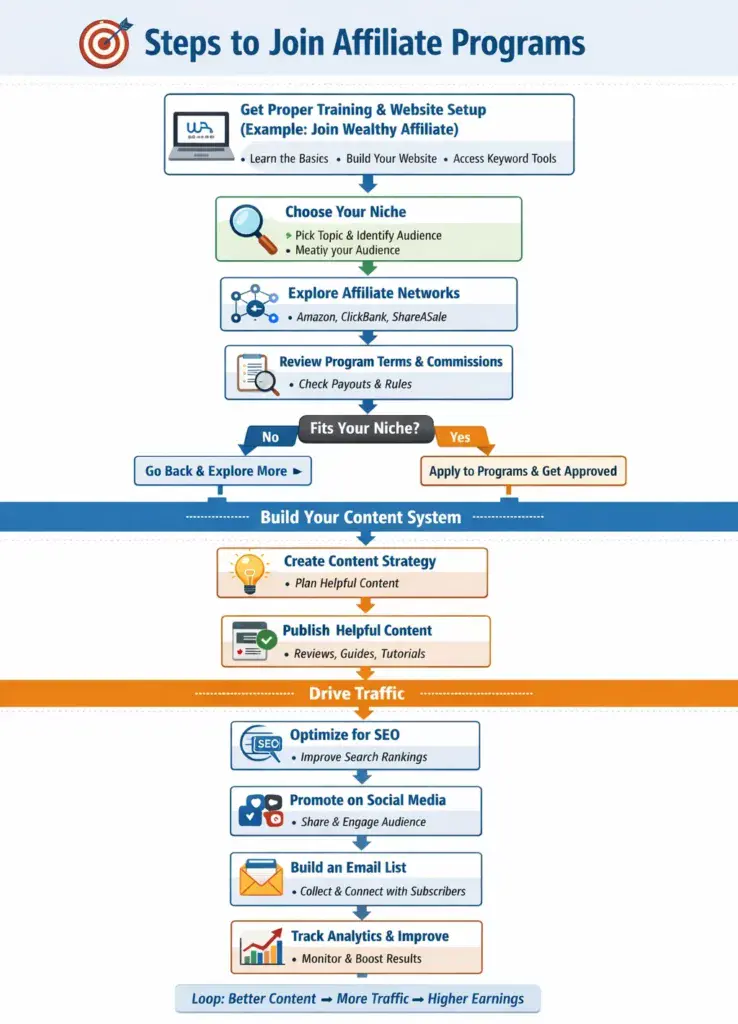
Evaluating the terms, conditions, and commission rates of affiliate programs is critical. You want to make sure you understand how much you’ll earn for each sale and any rules you need to follow. Some programs might have requirements, so read the fine print carefully.
The application process usually involves signing up on the affiliate network’s website and applying to specific programs. Some require approval, which means you’ll need a bit of an online presence or a clear plan on how you’ll promote their products. It’s about showing that you can bring value to their brand.
Legal stuff matters too. This means disclosing your affiliate relationships publicly. Not only is honesty the best policy, but there are also regulations requiring disclosure to protect consumers. Being transparent about your affiliations builds trust with your audience.
Building a Content Strategy
Crafting a solid content strategy is your secret weapon in affiliate marketing. It’s your plan for creating and sharing valuable content that draws people in and encourages them to make purchases. The trick is to focus on quality over quantity. Engaging content that offers real value is what keeps people coming back.
To grab your audience’s attention, your content needs to be top-notch and relatable. Whether you’re writing a blog post, shooting a video, or posting on social media, aim to create stuff that speaks directly to your audience’s needs and interests. Personal experiences or insights can really make your content pop.
There’s a whole world of content types you can use for affiliate promotions. Write informative reviews, create how-to guides, or curate lists of top products. Don’t shy away from multimedia approaches like infographics or video tutorials—they’re often more engaging and can be shared across different platforms.
Social media and blogging are powerhouse platforms for promoting your affiliate links. Consistently posting engaging content helps in building your authority and growing your audience organically. Being active and interacting with your followers nurtures your community and keeps your brand alive in their minds.
Increasing Traffic to Your Affiliate Links
Boosting traffic to your affiliate links is all about visibility. You want as many eyeballs on your content and links as possible. Start with the basics of SEO. It’s not rocket science—think keywords, good content structure, and meta tags. These small tweaks can make your content easier to find on search engines.
Social media is your best friend when it comes to driving traffic. Platforms like Instagram, TikTok, and YouTube can amplify your reach. Tailor your content to each platform’s vibe and keep your audience engaged with regular posts, stories, or live sessions.
Email marketing might sound old school, but it’s still super effective. Building an email list gives you direct access to people who are really interested in what you have to say. Use your emails to share valuable content and keep your audience in the loop about new products they might love.
Understanding analytics is like having a roadmap. Tools like Google Analytics show which content is resonating with your audience and driving traffic. With these insights, you can tweak your strategy—double down on what works and ditch what doesn’t.
Ethical Considerations in Affiliate Marketing
In affiliate marketing, transparency is key. When recommending products, it’s not just about making sales; it’s also about being upfront with your audience. Being honest about your relationships with brands strengthens trust and credibility.
Your audience’s trust hinges on your honesty. If they believe your recommendations are genuine, they’re more likely to keep coming back and even follow your advice. It’s all about building a long-term relationship, not just a quick buck.
Respecting user privacy is non-negotiable. Keep personal data safe and adhere to all legal regulations around data protection. Ensuring your audience’s safety builds a strong foundation for any marketing efforts.
Keeping your content authentic is a delicate balance when promoting products. It’s important to weave promotions naturally into your narrative rather than forcing them. This way, promotions feel helpful and less like a hard sell, maintaining your credibility.
Challenges and Solutions in Affiliate Marketing
Like any venture, affiliate marketing has its share of hurdles, especially for college students. One common pitfall is juggling time between classwork and marketing tasks. It can feel overwhelming trying to balance both, but time management tools and techniques can help keep everything on track.
Keeping up motivation is another common challenge. The affiliate marketing world can be slow to yield profits at first, which might discourage many. Staying motivated means setting realistic expectations and celebrating small wins along the way.
Understanding the digital tools required can also be a barrier for some. Navigating platforms, analytics, and content creation tools can seem daunting. Investing time in learning these tools, possibly through online courses or resources, is an upfront effort that pays off in the long run.
Sometimes the issue is innovating past competition in a crowded market. Stand out by finding your unique voice or a fresh take on popular products. This uniqueness can attract an audience that’s looking for something a bit different, increasing your chances for success.
Conclusion: The Path Forward
Affiliate marketing could be a game-changer for college students looking for new ways to earn income and hone digital skills. With the right niche and a solid strategy, it’s an opportunity worth exploring.
Success in affiliate marketing involves more than just understanding the basics. It’s about building and maintaining relationships, continuously adapting to the market trends, and keeping your audience’s trust at the forefront.
Future opportunities in affiliate marketing are vast and evolving. Staying informed and innovative will set you apart and open doors to even more rewarding ventures.
Keeping the momentum and enthusiasm can help sustain your efforts in the long run. Keep learning, stay adaptable, and never underestimate the power of a committed and honest approach.